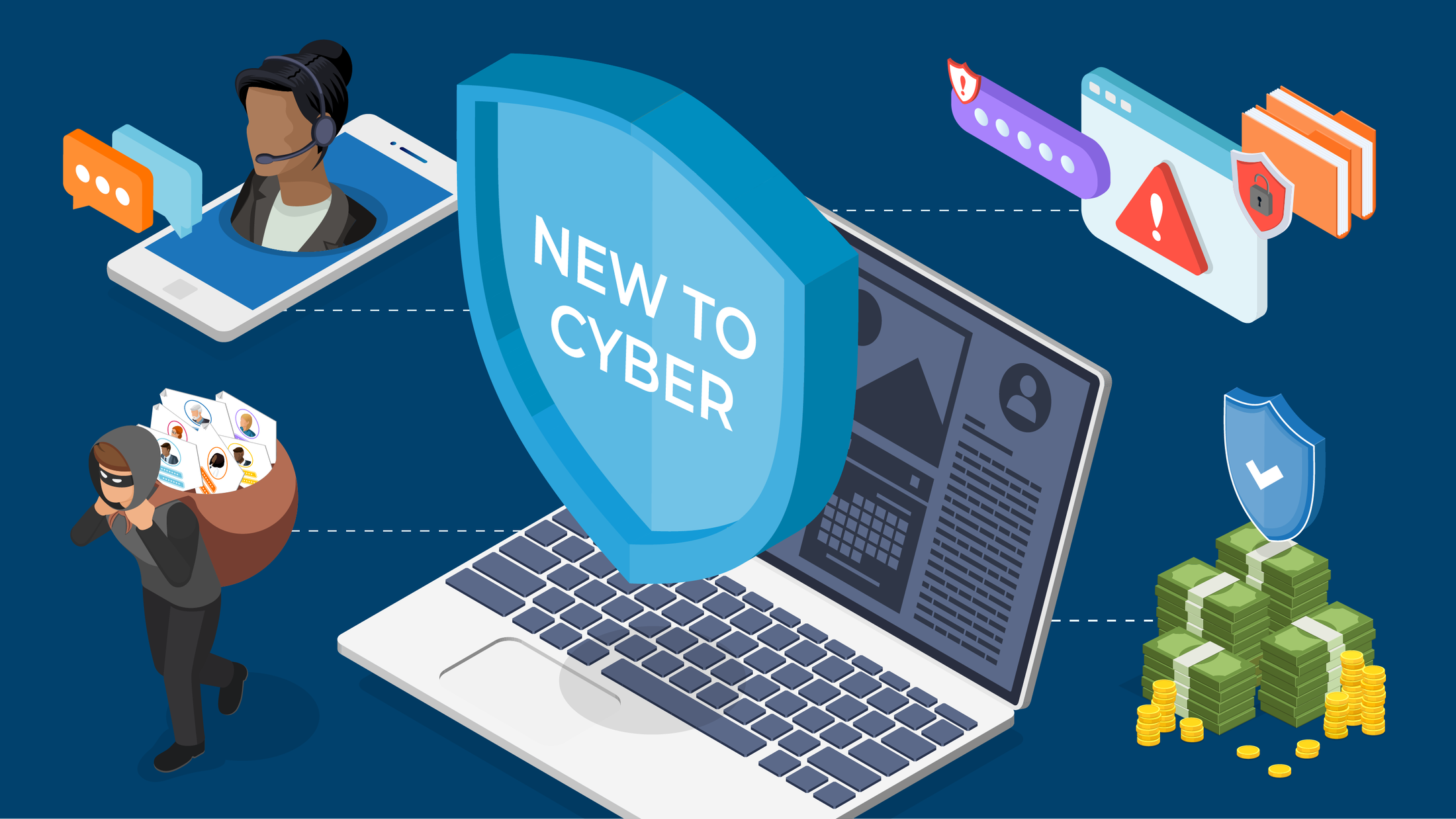
Cyber risk is now a board-level concern for businesses of every size, but especially small and midsized organizations which often lack dedicated security teams. As the threat landscape becomes exponentially more sophisticated, cyber resilience means not only preventing attacks, but also ensuring the business can continue operating during disruption, and recover fast.
For cyber insurance brokers, there is a clear opportunity here – to move beyond placement, and become essential partners aiding their clients in understanding, managing, and effectively transferring cyber risk.
Cyber resilience is a critical business priority
Digital systems now underpin almost every aspect of operations: payment processing, customer data, communications, technology operations, supply chain coordination. This means even a short downtime can produce drastic financial and reputational harm.
Unlike traditional risks, cyber incidents often have layered impacts:
immediate operational disruption
data loss or system compromise
regulatory consequences and notification requirements
long-term reputational damage
legal ramifications
revenue loss from downtime.
The rise of ransomware-as-a-service, phishing campaigns powered by AI, and increasingly targeted attacks on smaller businesses has dramatically shifted the risk profile. No longer are smaller firms “too small to target” – in fact they’re often considered easier entry points.
All of this is to say: Cyber resilience is now a necessity for businesses, not a luxury. Moreover, it reinforces the importance of brokers helping clients move from reactive thinking to proactive risk management.
Take a proactive approach to cyber resilience – with Response
Free to all CFC cyber policyholders, CFC’s Response app enables businesses to identify risks before they become incidents, with practical tools such as vulnerability scanning, phishing simulations, and dark web monitoring.
What role does the broker play in cyber risk management?
More and more cyber insurance brokers are acting as advisors rather than just intermediaries. Many business owners understand cyber security in the abstract, but struggle to connect it to operational or financial consequences. Brokers can therefore help clients translate technical cyber risks into clear business impact, bridging the gap by:
explaining how specific threats translate into business disruption
quantifying potential financial exposure from cyber incidents
guiding prioritization of risk mitigation investments
aligning insurance decisions with real operational risk.
This advisory role is especially important for small businesses, whose internal expertise may be limited. Brokers can make sure their clients avoid both underinsurance and unnecessary coverage complexity.
CFC case study
When the critical React2Shell vulnerability emerged, CFC’s proactive cyber security team quickly identified affected clients and issued targeted alerts with clear remediation guidance.
By combining early threat intelligence, exposure analysis, and rapid communication, CFC helped businesses address vulnerabilities before they could be widely exploited, highlighting how early intervention dramatically lowers the likelihood of ransomware, operational disruption, and costly cyber incidents.
Identifying client vulnerabilities and risk exposure
Improving cyber resilience means seeing where a business is most exposed. Cyber insurance brokers can support clients through structured cyber risk assessment conversations that go way beyond surface-level IT questions.
Common areas of vulnerability include:
-
Technology infrastructure
Legacy systems without security updates
Lack of endpoint protection
Poorly configured cloud environments
Irregular patching routines
-
Human risk factors
Weak password practices
Phishing susceptibility
Limited employee training or awareness
-
Third-party dependencies
Supply chain software providers
Outsourced IT services
Payment processors and SaaS platforms
-
Data and access management
Overly broad user permissions
Lack of multifactor authentication
Inadequate data segmentation and back ups
Not every organization needs enterprise-grade security tools – but they are strongly recommended to get visibility into their weakest points.
Key cyber controls businesses should implement
While cyber risk management can seem complex, many effective controls are practical, affordable, and highly impactful. Brokers can help clients focus on achievable improvements that significantly strengthen cyber resilience:
multifactor authentication (MFA) is one of the simplest yet most effective defenses against credential theft and unauthorized access
regular software patching reduces exposure to vulnerabilities known to be exploited in automated attacks
employee awareness training reduces phishing success rates and improves incident reporting
secure backups, which should be regularly tested, stored offline or in cloud environments, and protected from ransomware encryption
access controls and least-privilege principles, meaning employees have access only to those systems and data necessary for their roles
email security filtering lessens the likelihood of phishing campaigns and attempts to compromise business emails.
These cyber resilience strategies don’t require large budgets, but they do demand consistency. Brokers can help clients prioritize implementation based on risk severity and operational feasibility.
Cyber Proactive Response: broader protection for modern cyber risks
CFC’s Cyber Proactive Response (CPR) policy addresses a wider range of cyber-related losses than traditional cyber insurance.
Through real-world claims scenarios, CPR demonstrates how coverage can respond to emerging risks such as AI-enabled attacks, invoice manipulation, physical goods fraud, voluntary shutdowns, and operational technology failures.
Aligning cyber insurance with risk management
Cyber insurance should not sit separately from a company’s security posture. It should work in tandem with cyber security practices, with the best policies offering a range of proactive cyber attack prevention services to help stop attacks from happening.
Cyber insurance also supports with:
incident response costs, including forensic investigation
business interruption losses from system downtime
ransomware negotiation and recovery support
regulatory response and legal expenses
data restoration and system recovery
However, the effectiveness of coverage depends on alignment with actual exposure. Cyber insurance brokers play a key role in ensuring policies reflect:
the size and complexity of the business
industry-specific threats
revenue dependency on digital systems
existing security controls.
This alignment ensures cyber insurance truly acts as a safety net rather than existing as nothing more than a disconnected financial product.
How to support clients through an incident
Before: planning and preparation
Conduct cyber risk assessment discussions
Identify control gaps
Ensure incident response plans are in place
Review insurance adequacy
During: rapid response and guidance
Contact your insurer with technical responders on hand to triage
Work with your dedicated cyber claims team
Coordinate communications and claims processes
Reduce delays in recovery actions
After: recovery and improvement
Resolve the claim and lay out a roadmap for financial recovery
Review what went wrong
Strengthen controls to prevent recurrence
Update coverage based on new exposure
Building long-term cyber resilience strategies
As threats change, so must the approach businesses take to managing them.
Long-term cyber resilience for businesses typically involves:
regular review of cyber insurance coverage
ongoing employee training refreshers
continual improvement of security controls
periodic cyber risk reassessments
updating incident response plans.
Brokers are well positioned to support this ongoing cycle. By maintaining regular client engagement, they can ensure insurance and risk strategies evolve alongside the threat landscape. This is especially vital in light of emerging risks like AI-driven phishing, supply chain attacks, and cloud misconfigurations.
Moving forward with confidence
As cyber threats continue to evolve, businesses cannot rely on prevention alone. True resilience comes from preparation, response capability, and recovery planning – all supported by the right insurance structure and advisory guidance.
Cyber insurance brokers are central to this process. By combining risk insight with tailored cyber insurance solutions, they empower their clients to build a resilience that’s both practical and achievable.
Get in touch with CFC to see how we’re supporting both brokers and their clients with cyber resilience strategies, cyber risk management, and cyber insurance solutions.