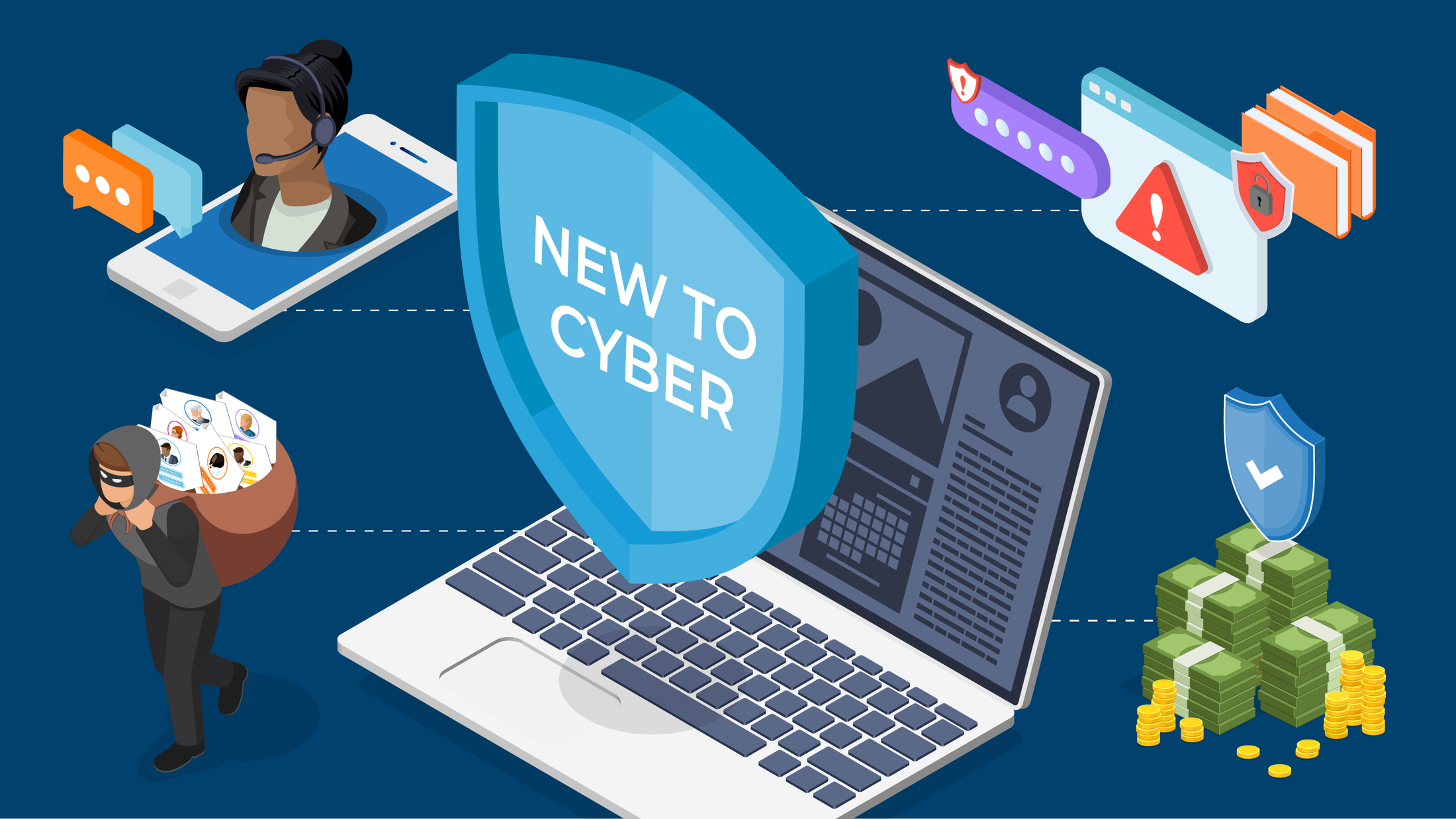
AI is reshaping the cyber threat landscape at an unprecedented pace. What once required time and technical expertise can now be automated, scaled, and deployed with minimal effort. AI lowers the barrier to entry for cybercriminals – and has simultaneously raised the stakes for small businesses.
Cybercriminals now use AI tools to enhance the speed, accuracy, and impact of their attacks. These tools enable them to craft highly convincing phishing emails, automate ransomware campaigns, and exploit vulnerabilities at scale.
For brokers and clients alike, the implication is clear: AI cyber security risks are no longer theoretical, but are actually changing the very nature of attacks and their likelihood of success, especially when inflicted upon SMEs.
The rise of AI-driven cyber threats
AI is making cybercrime at once more efficient, more targeted, and more accessible.
Previously, launching a convincing phishing campaign required time and skill. Today, AI tools can:
generate realistic emails in seconds
mimic writing styles and tone
translate messages flawlessly across languages
personalize attacks using publicly available data.
This has transformed the sheer scale of attacks. Instead of “settling” for broad, generic campaigns, cybercriminals can now target hundreds of businesses with tailored messages that feel totally legitimate. This represents a critical shift for SMEs, which often lack:
advanced email filtering tools
dedicated cyber security teams
continuous threat monitoring.
As a result, SMEs are considered easy entry points, stepping stones into larger supply chains.
CFC case study
A large enterprise using an AI-powered hiring platform faced a discrimination lawsuit after a flaw in the system’s training data led to qualified candidates of a certain demographic being disproportionately filtered out.
The rejected applicant alleged algorithmic bias, unfair treatment, and reputational harm. This triggered legal, regulatory, and media scrutiny, alongside claims for financial loss and discriminatory decision making.
CFC’s technology insurance responded across multiple areas: technology errors and omissions (E&O), media liability, regulatory defense costs, and affirmative AI coverage for algorithmic bias. Claim costs totaled just shy of £1M.
AI amplifies traditional cyber risks for small businesses
AI isn’t so much replacing traditional cyber threats as exacerbating them.
Phishing and social engineering
AI-generated phishing emails are significantly harder to detect, because they:
avoid common grammatical errors
use contextual business information
adapt messaging based on responses.
This increases the success rate of attacks, particularly in smaller organizations whose employees may not receive regular training.
Ransomware
AI enables attackers to:
identify high-value or vulnerable targets faster
automate distribution of malware optimize timing for maximum disruption
analyze and review breached data at speed to determine value and better determine the ransom amount.
For small businesses, even a short period of downtime can be financially damaging. When ransomware halts operations, the impact extends beyond IT into revenue, customer trust, and regulatory exposure.
Business email compromise (BEC)
AI-driven impersonation is making BEC attacks far more convincing. Say a finance manager receives an email from what appears to be the CEO, requesting urgent payment to a supplier. The email reflects the CEO’s usual tone, and moreover references a real project. The request is processed without verification, and the funds transferred to a fraudulent account.
Data breaches
AI tools can rapidly identify and exploit weak points in systems. Once inside, attackers can use AI to speed up the following:
identify and extract sensitive data
map and rank internal networks
escalate privileges.
The consequences of a data breach are often disproportionate for SMEs, as recovery costs, regulatory fines, and reputational damage can threaten business continuity.
Cyber Masterclass
If you’d like to learn more about how to continually adapt in order to maintain your organization’s cyber hygiene, explore CFC’s Cyber Masterclass, our series of 28+ on-demand videos brought to you by the experts.
You can even become Cyber-Certified on the back of it, accredited in New York, Illinois, Texas and Florida.
Why are small businesses especially vulnerable?
SMEs aren’t targeted despite their size, but because of it. Several structural factors exacerbate their exposure:
Limited resources
Most SMEs lack:
dedicated cyber security teams
advanced detection and response tools
24/7 monitoring capabilities.
the cyber education to identify threats
This produces gaps that AI-driven attacks can exploit fast.
Less mature controls
Fundamentals like multifactor authentication, patch management, and access controls may not be consistently implemented. Even where controls exist, they may not be regularly tested or updated.
Reliance on third parties
Small businesses often depend on external providers for:
cloud services
payment processing
IT support.
This introduces supply chain risk. A vulnerability in one vendor may expose multiple businesses.
Higher relative impact
While large organizations may absorb the cost of an incident, SMEs face:
immediate cash flow disruption
operational downtime
long-term reputational damage.
Often even just a single cyber event can have lasting consequences.
Stay ahead of AI-driven cyber threats
Sign up for CFC’s latest AI content, as we delve into the opportunities, risks, and challenges AI’s bringing to every industry.
Implications for cyber insurance and underwriting
As AI in cybercrime evolves, so too must underwriting. Likewise insurers must focus on understanding how small businesses manage risk in practice, not just in theory. Key areas of assessment include:
cyber hygiene controls: MFA, backups, endpoint protection
employee awareness: phishing training, internal policies
incident response readiness: plans, vendors, escalation processes
third-party dependencies: exposure through platforms and suppliers.
Insurers also need to consider when evaluating AI-driven threats:
frequency of potential incidents
severity of losses
speed of attack progression.
This has led to more dynamic underwriting approaches, as well as clearer expectations around minimum security standards.
Due to the fact that AI isn’t creating new attack types, only exacerbating those already existing, it means current cyber cover should be for the most part prepared to cover AI-fueled attacks. From a coverage perspective, cyber insurance is generally prepared to address:
ransomware payments and negotiation support
business interruption losses
incident response and forensic investigation
legal and regulatory costs
data recovery and system restoration.
This creates an opportunity for brokers to guide clients through cyber insurance coverage options, ensuring policies reflect real-world exposures like AI.
CFC case study
A technology company manufacturing AI-powered smart aquarium controllers faced a major liability claim after a system malfunction caused severe financial and property damage. The AI system failed to regulate temperature and issue warning alerts, with the resultant overheating killing fish and destroying an aquarium setup. The customer also suffered contractual losses because of supply agreements with restaurant clients, inflating the claim value.
Investigation confirmed our client was liable for the failure. Their CFC technology insurance responded to cover financial loss, property damage, and contractual breach exposure, resolving the claim and even preserving their commercial relationship with the customer.
How does cyber insurance make small businesses more resilient?
Small business cyber insurance represents more than financial protection – it also ensures access to expertise and rapid response. A good insurance provider like CFC offers proactive cyber attack prevention services free with the policy, there to help stop cyber attacks before they impact – on top of incident response services to minimize impact when attacks do occur.
When an incident arises, a policy typically provides:
Immediate incident response
Access to cyber security specialists
Containment and remediation support
Forensic investigation to identify the cause
Financial protection
Coverage for ransom payments where appropriate
Reimbursement for business interruption losses
Costs associated with data recovery
Legal and regulatory support
Guidance on breach notification requirements
Legal defense costs
Regulatory fines and penalties where insurable
Reputation management
PR support
Customer communication strategies
Prepare for the next generation of AI-driven cyber threats
Insurance is vital – but prevention and preparedness remain essential.
Strengthen cyber hygiene
Implement multifactor authentication across all systems
Keep software and systems up to date
Use endpoint detection and response tools
Regularly train employees
Conduct phishing awareness training
Encourage verification of unusual requests
Promote a culture of security awareness
Maintain reliable backups
Use secure offline backups
Frequently test recovery processes
Ensure backups aren’t accessible from primary systems
Manage third-party risk
Assess vendor security practices
Limit access to critical systems
Monitor integrations and data sharing
Develop an incident response plan
Define roles and responsibilities
Establish communication protocols
Identify external partners in advance
Engage brokers early
Brokers play a vital role in helping clients:
understand how AI is changing cyber risk for small businesses
highlight gaps in current controls
align insurance coverage with evolving exposures.
By combining proactive risk management with tailored insurance, businesses can dramatically improve their resilience.
Stay ahead of a fast-evolving threat landscape
AI is exponentially accelerating the pace of cyber risk – but at the same time it’s shining a light on vulnerabilities.
For small businesses, the challenge isn’t even just to keep up, but to prioritize those controls and protections that matter most.
For brokers and underwriters, meanwhile, the focus should remain on practical, real-world risks: how attacks usually occur, where defenses are weakest, and how fast a business can respond and recover.
If you’re looking to bolster your clients’ resilience against AI-enhanced attacks, get in touch to explore CFC’s cyber insurance solutions, specially designed for SMEs.